
Dental Health
5 min read

Dentestha Team
10/07/2026
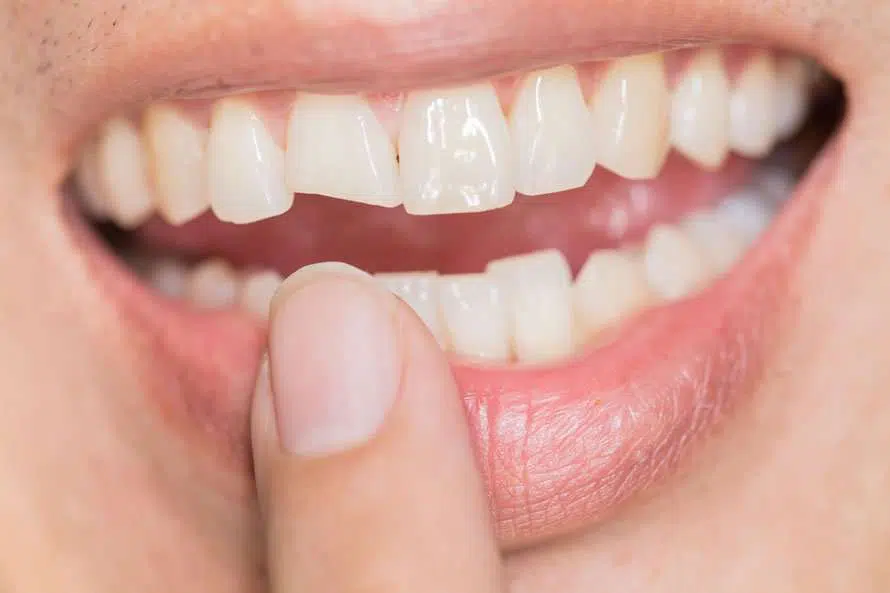
A small piece of your tooth breaks while eating. Or perhaps you suddenly feel a sharp edge with your tongue and realize that your tooth is cracked.
It can be worrying, especially if there is pain involved. But a chipped or cracked tooth does not always mean the tooth has to be removed.
The right treatment depends on how much of the tooth is damaged, where the crack is located, and whether the inner part of the tooth has been affected.
These two problems are not exactly the same.
A Chipped Tooth usually means a small piece of the tooth has broken off. It may feel rough or sharp, but the damage may be limited to the outer part of the tooth.
A Cracked Tooth has a fracture that extends through part of the tooth. Some cracks are minor, while others can extend deeper and affect the inner tissues.
That difference matters because treatment can vary significantly.
For a small chip, Dental Bonding may be enough.
A tooth-colored material is applied to the damaged area and shaped to restore the tooth's appearance and function. The procedure is often quick and minimally invasive.
If the chip is mainly a cosmetic concern, a Veneer may be considered in suitable cases.
A veneer covers the front surface of the tooth and can improve its shape and appearance.
If a significant portion of the tooth is damaged, a Dental Crown may help protect and restore it.
A crown covers the tooth and provides additional support.
How Is a Cracked Tooth Treated?
The treatment depends on the depth and location of the crack.
A minor crack may sometimes be monitored or protected with a Dental Crown.
If the crack has reached the inner pulp of the tooth, Root Canal Treatment may be necessary to remove the damaged or infected tissue before the tooth is restored.
However, if a crack extends below the gumline and the tooth cannot be saved, extraction may sometimes be required.
A crack may not always cause immediate pain.
But chewing can gradually make the crack worse. Bacteria may also enter through the damaged area and reach the inner part of the tooth.
Over time, a small problem can become much more difficult to treat.
If your tooth has chipped or cracked:
Avoid chewing hard foods on that side.
Rinse your mouth gently with water.
Avoid very hot or cold foods if the tooth is sensitive.
Do not try to repair the tooth yourself.
Schedule a dental examination as soon as possible.
If a piece of the tooth has broken off, you can bring it with you to your dental appointment.
When Is It a Dental Emergency?
Seek prompt dental care if you experience:
Severe tooth pain
Facial swelling
Significant bleeding
A large portion of the tooth has broken
Extreme sensitivity
Difficulty eating or closing your mouth
A cracked tooth can sometimes worsen quickly, so delaying care is not always a good idea.
No. Once a part of a permanent tooth has broken, it cannot naturally grow back. However, modern dental treatments can restore its appearance and function.
No. Teeth cannot repair deep cracks on their own. Early treatment can help prevent the crack from getting worse.
Not necessarily. A small chip may only require simple treatment, but a dental examination is still recommended to check for deeper damage.
Often, yes. The possibility depends on the location and severity of the crack.
It is better not to ignore it. Some cracks cause little or no pain at first but may become more serious over time.
A chipped or cracked tooth can often be repaired, but the right treatment depends on the extent of the damage. A small chip may be restored with Dental Bonding, while a more severely damaged tooth may require a Crown or Root Canal Treatment.
The sooner the tooth is examined, the more options there may be to protect it.
If you have a chipped, cracked, or broken tooth, visit Dentestha for a professional dental evaluation and personalized treatment guidance.
Dental Health