
Hair Care
5 min read

Dentestha Team
14/07/2026
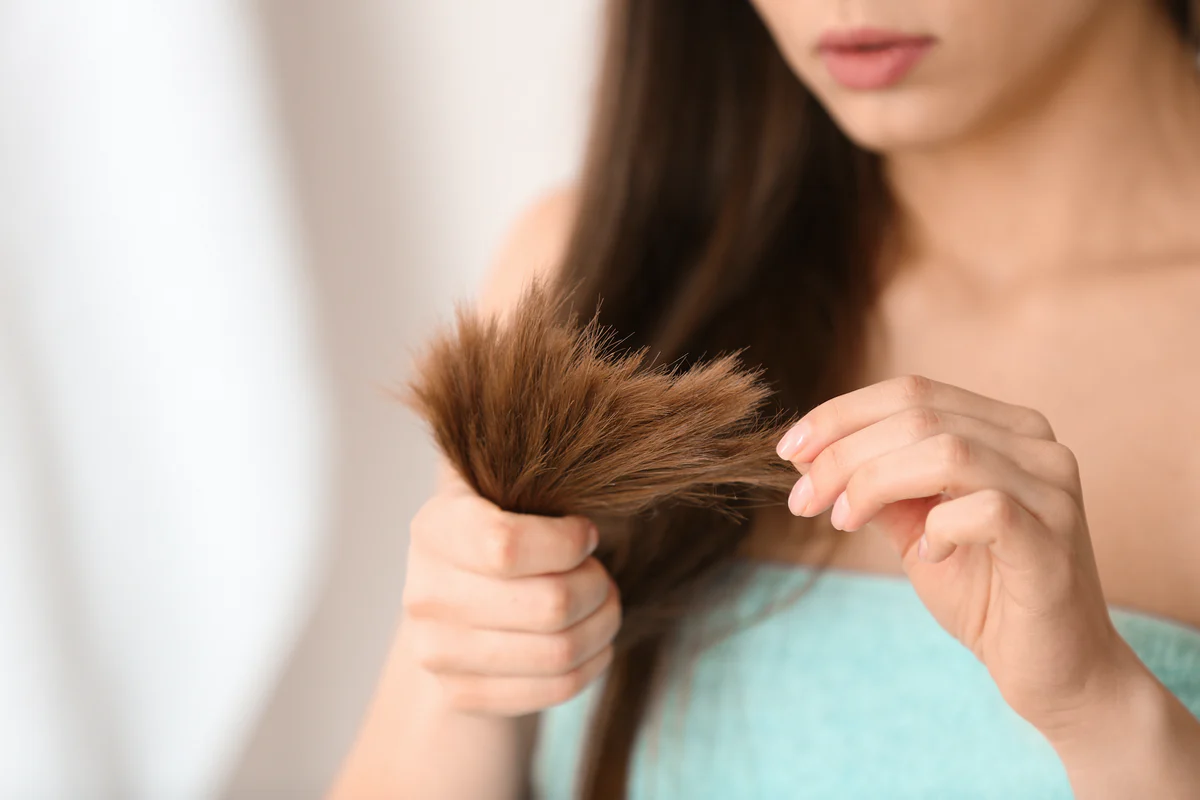
You notice a tiny split at the end of your hair. Then another one. Before long, the ends look dry, rough, and frizzy.
But can a product actually repair a split end once it has formed?
The short answer is no. However, understanding what causes split ends can help you prevent them from getting worse and protect your hair from future damage.
A Split End occurs when the protective outer layer of a hair strand becomes damaged and the end begins to split.
This can happen in different ways. The hair may split into two or more sections, become thinner at the end, or develop a rough, frayed appearance.
Split ends are a form of Hair Damage and may also be linked to increased Hair Breakage.
Straighteners, Curling Irons, and high heat from Hair Dryers can gradually weaken the hair.
Repeated heat exposure may damage the outer layer of the hair, making the ends more fragile.
Bleaching, Hair Coloring, Relaxing, and other chemical treatments can affect the structure of the hair.
When the hair becomes weaker, split ends may develop more easily.
Pulling through knots or brushing too aggressively can place stress on the hair.
Over time, this repeated tension may contribute to split ends and breakage.
Hair that is excessively dry can become brittle.
Environmental factors, frequent washing, harsh products, and heat styling may all contribute to moisture loss.
Rubbing against pillows, towels, clothing, or other surfaces can gradually create friction and damage the hair ends.
Small habits can sometimes make a difference over time.
Unfortunately, once a hair strand has split, it cannot permanently fuse itself back together.
Some Hair Care Products may temporarily smooth the appearance of split ends, making the hair look healthier.
But this does not permanently repair the damaged strand.
The most reliable way to remove existing split ends is to trim the damaged section.
You can reduce the risk of future damage by:
Using Heat Protectant before heat styling.
Limiting frequent use of high-heat tools.
Detangling hair gently.
Avoiding unnecessary chemical treatments.
Using suitable Shampoo and Conditioner.
Keeping the hair moisturized.
Trimming the ends regularly.
Prevention is usually more effective than trying to fix severe damage after it has already occurred.
No. Trimming does not change the rate at which hair grows from the scalp.
However, removing split ends may help prevent the damage from travelling further up the hair shaft. This can help the hair maintain its length and appear healthier.
Consider professional advice if you experience:
Severe Hair Breakage
Sudden changes in hair texture
Excessive Hair Fall
Persistent scalp problems
Hair damage that continues despite improving your routine
A professional can help determine whether the issue is related to hair care habits or an underlying scalp or health concern.
No. Once a hair strand has split, it cannot permanently repair itself.
Hair oils may help reduce dryness and improve the appearance of the hair, but they cannot permanently repair an existing split end.
There is no fixed schedule for everyone. Trimming when the ends become visibly damaged can help prevent further splitting.
Trimming removes existing damaged ends. Preventing future split ends also requires reducing heat, chemical, and mechanical damage.
Split ends themselves do not usually cause Hair Loss from the root, but severe damage can contribute to Hair Breakage.
Split ends develop when the protective structure of the hair becomes damaged. Heat styling, chemical treatments, dryness, rough brushing, and friction can all contribute to the problem.
Once a hair strand has split, it cannot be permanently repaired. Trimming removes the damaged ends, while gentle Hair Care habits can help prevent new split ends from forming.
If you are experiencing severe Hair Damage, excessive breakage, or other changes in your hair health, visit Dentestha for a professional hair and scalp assessment and personalized treatment guidance.
Hair Care