
Dental Health
5 min read

Dentestha Team
09/07/2026
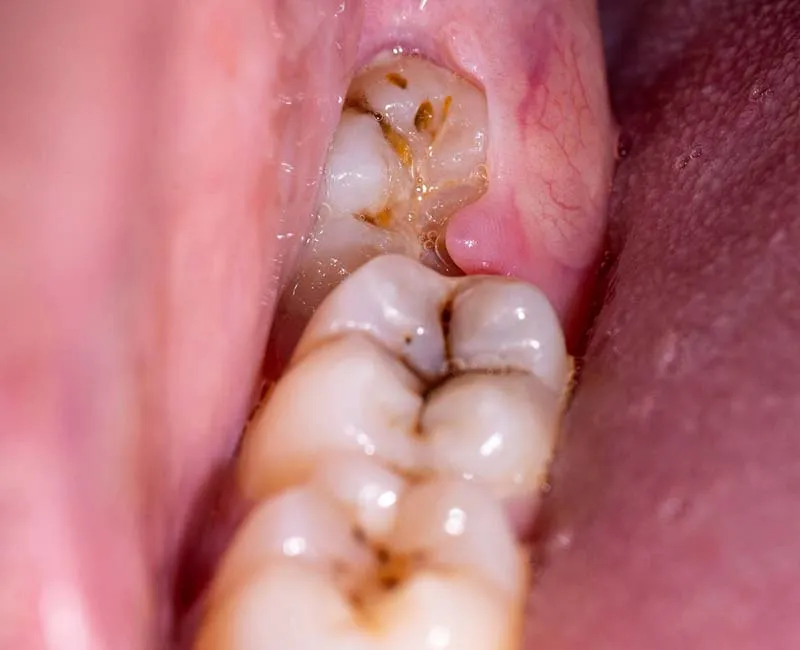
A sudden pain at the very back of your mouth can be surprisingly uncomfortable. Your gum may feel swollen, chewing may become difficult, and sometimes even opening your mouth feels painful.
If you've experienced this, your Wisdom Teeth may be the reason.
Wisdom Teeth are the last set of teeth to develop, and for many people, they don't have enough room to grow properly. As a result, they may come in at an angle, remain trapped beneath the gum, or only partially emerge. That's when problems often begin.
But here's the important part: not every Wisdom Tooth needs to be removed. The real concern is whether the tooth is causing pain, infection, damage, or repeated problems.
So, why do Wisdom Teeth cause so many issues? Let's take a closer look.
Wisdom Teeth usually appear at the very back of the mouth, often after the other permanent teeth have already taken up most of the available space.
When there isn't enough room, the tooth may struggle to grow normally.
It may:
Grow at an angle
Push against a nearby tooth
Remain trapped beneath the gum
Partially emerge
Fail to come through completely
This lack of space is one of the main reasons Wisdom Teeth are associated with pain and other dental problems.
You may have heard the term Impacted Wisdom Tooth before.
Simply put, a Wisdom Tooth is considered impacted when it cannot properly emerge because it is blocked by the gum, bone, or another tooth.
Some impacted teeth remain completely beneath the gum. Others may partially come through at an unusual angle.
The problem is that these teeth can be difficult to clean. Food particles and bacteria may collect around them, increasing the risk of infection and gum problems.
As a Wisdom Tooth tries to emerge, it may place pressure on the surrounding gum and nearby teeth.
The discomfort may be mild at first. However, it can become more noticeable when chewing or opening the mouth.
A partially erupted Wisdom Tooth can leave a small area of gum around the tooth.
Food and bacteria can easily become trapped there. Over time, this may cause swelling, irritation, and infection.
The back of the mouth is already difficult to clean. When a Wisdom Tooth grows partially or at an unusual angle, food can become trapped even more easily.
This may contribute to bad breath, gum irritation, and recurring infections.
An impacted Wisdom Tooth may press against the tooth next to it.
Over time, this pressure can contribute to damage or make the surrounding area more difficult to keep clean.
When there is significant swelling or infection around a Wisdom Tooth, opening the mouth may become uncomfortable or difficult.
In some cases, chewing can also become painful.
No. Not every Wisdom Tooth needs to be removed.
If the tooth has grown properly, can be cleaned easily, and is not causing pain, infection, or damage to nearby teeth, your dentist may simply recommend monitoring it.
However, repeated problems may be a different story.
If the same Wisdom Tooth keeps causing pain or infection, removal may be recommended to prevent further complications.
When Might Wisdom Tooth Removal Be Necessary?
A dentist may consider Wisdom Tooth Removal when the tooth:
Causes repeated pain
Becomes infected multiple times
Is impacted
Damages a nearby tooth
Traps food frequently
Causes repeated gum swelling
Is extremely difficult to clean
The decision is usually based on a dental examination and, when necessary, Dental X-rays.
Not every Wisdom Tooth problem can be prevented. However, regular Dental Checkups can help identify potential problems before they become severe.
Good oral hygiene also matters.
Try to:
Brush your teeth regularly
Clean the back areas of your mouth carefully
Floss regularly
Avoid ignoring recurring Wisdom Tooth pain
Attend routine Dental Checkups
A small problem is often easier to manage before it turns into a painful infection.
You should consider seeing a dentist if you experience:
Severe or recurring pain
Swelling around the gum or face
Difficulty opening your mouth
Pain while chewing
Fever
A bad taste in your mouth
Pus around the gum
One important thing to remember: if the pain suddenly goes away, it doesn't always mean the problem has completely disappeared. Some dental infections may temporarily improve and return later.
Wisdom Teeth commonly begin to emerge during the late teenage years or early adulthood. However, the timing varies from person to person.
No. If a Wisdom Tooth is healthy, properly positioned, and not causing problems, removal may not be necessary.
An impacted tooth may lead to recurring pain, infection, gum problems, or damage to nearby teeth.
Yes. Pressure, swelling, and infection around a Wisdom Tooth can sometimes cause pain in the jaw.
Pain, swelling, redness, bad taste, pus, and fever may indicate an infection. A dental examination is needed for an accurate diagnosis.
Wisdom Teeth are not automatically a problem. The trouble usually begins when there isn't enough room for them to grow properly.
A tooth may become impacted, push against a nearby tooth, trap food, or cause repeated gum infections. However, not every Wisdom Tooth needs to be removed. The right decision depends on its position, condition, and whether it is causing ongoing problems.
If you are experiencing Wisdom Tooth pain, swelling, or recurring discomfort, visit Dentestha for a professional dental evaluation and personalized treatment guidance.
Dental Health